We rebuild failing sewer lines from the inside. No excavation. No shutdown.
Trenchless Solutions. Minimal Disruption.
Carolina Pipe Pros restores broken sewer and drain lines using UV cured-in-place pipe lining — protecting landscaping, parking, slabs, and occupants from the excavation a conventional repair would require.
Property managers, general contractors, facility and healthcare maintenance. Occupied buildings, tight schedules, finished grounds. Bonded and insured, COI on request, night and weekend work available.
Capability & compliance → HomeownersRecurring backups, root intrusion, cast iron and clay laterals at the end of their life. Camera inspection first, a straight answer second, and a repair that doesn't cost you the yard.
Find your city →What goes wrong underground
The problems we solve
Root intrusion
Roots find joints and cracks, then grow until the line blocks and backs up.
Cracked or deteriorated pipe
Aging pipe develops cracks and breaks that lead to leaks and failures.
Joint separation
Separated joints let soil and water infiltrate, causing sinkholes and voids.
Corrosion and material failure
Corroded or deteriorated pipe risks collapse and loss of service.
Costly disruption
Traditional excavation means torn-up landscaping, lost parking, and unhappy tenants.
Our solution
Trenchless pipe lining
Our UV cured-in-place pipe (CIPP) system restores damaged pipe from the inside out, forming a new structural pipe within the existing one. No trench, no torn-up property.
- No excavation
- Minimal disruption to residents, tenants, and daily operations
- Long-lasting results that prevent future problems
- Works on sanitary, storm, and other gravity-flow pipe
- Fits pipe from 3 inches to 8 inches in diameter
Pipe materials we rehabilitate
- Vitrified clay (VCP)
- Cast iron
- PVC
- Orangeburg
- Concrete


What you avoid
Conventional replacement may add
- Excavation and backfill
- Landscaping and hardscape restoration
- Asphalt or concrete replacement
- Traffic control and permitting
- Longer project timelines
- Increased tenant or occupant disruption
Every one of those is a line item on a dig-and-replace quote. Lining removes most of them.
How a lining job runs
Our proven process
Five steps start to finish. Most residential laterals are done in a day, and the yard, driveway, or parking lot stays exactly where it is.
Inspect
We run a CCTV camera through the line to find the fault and verify the pipe's condition before recommending anything.
Clean
High-pressure jetting strips roots, grease, and scale so the liner bonds to a clean host pipe.
Line
A resin-saturated liner goes in through an existing access point and is positioned inside the damaged pipe.
Cure
UV light cures the liner in place, forming a strong, seamless new pipe inside the old one.
Reinstate
Service is restored and verified on camera. We leave the property the way we found it.

Project record
What the work actually looks like
Real jobs, real photos. Scope details are listed plainly so you can judge whether your situation matches.
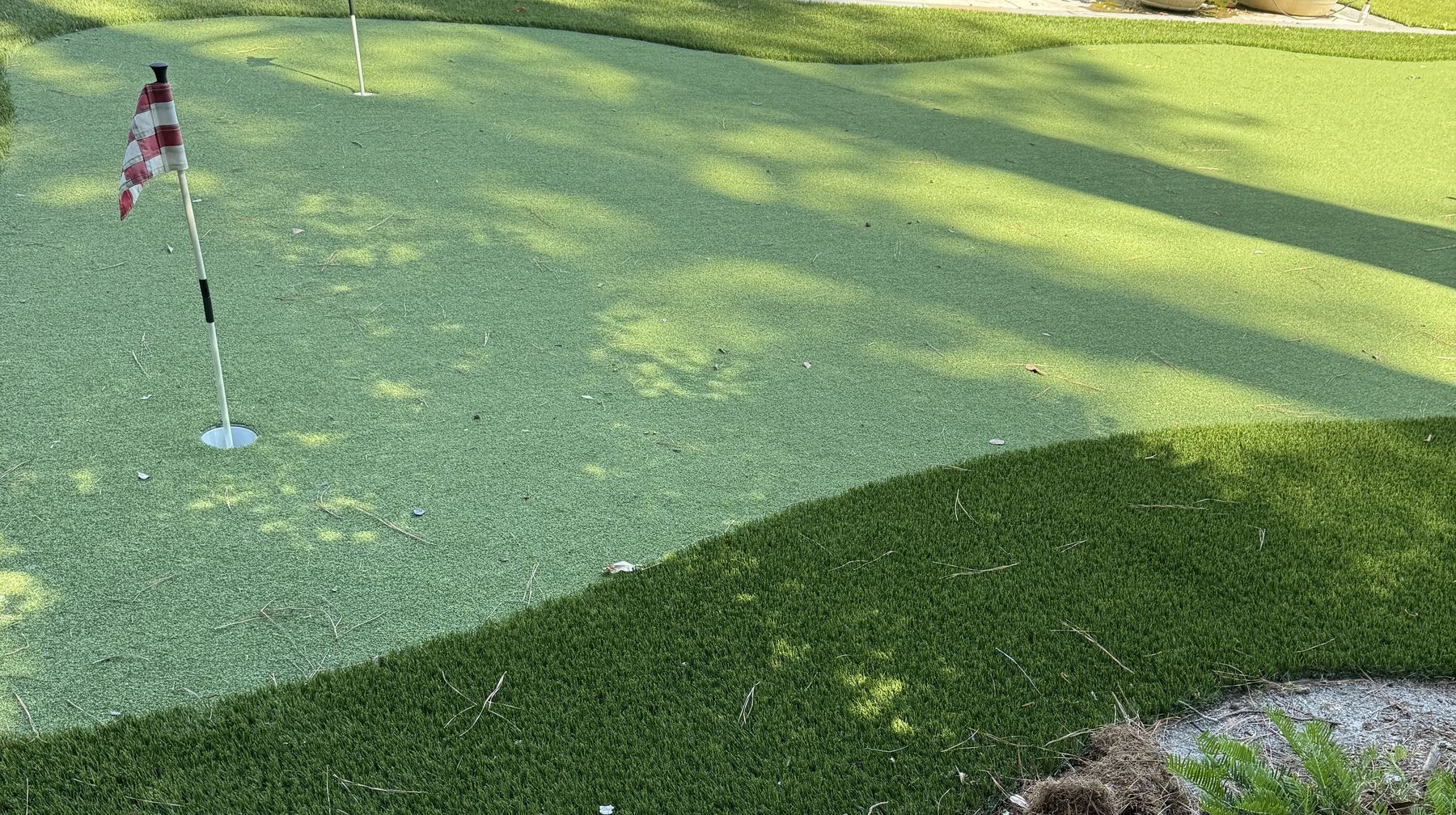
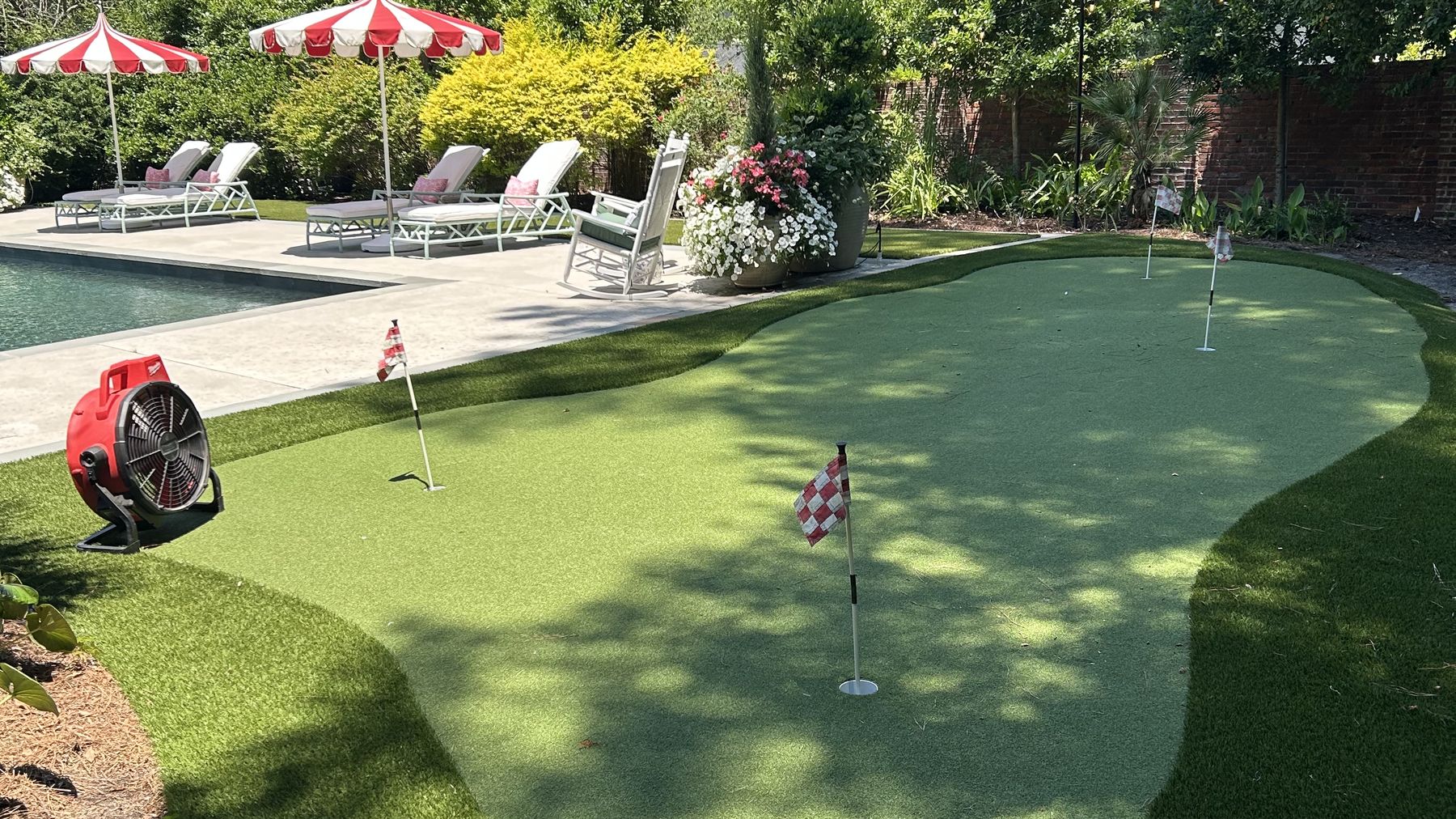
Lined beneath a putting green
The line running under this green and pool deck was rehabilitated through the cleanout visible in the pine straw at the edge of the turf. That access point is the only evidence the work happened. No turf lifted, no deck cut, no planting beds disturbed.
- Setting
- Putting green & pool deck
- Access
- Existing cleanout
- Excavation
- None
- Restoration
- None required
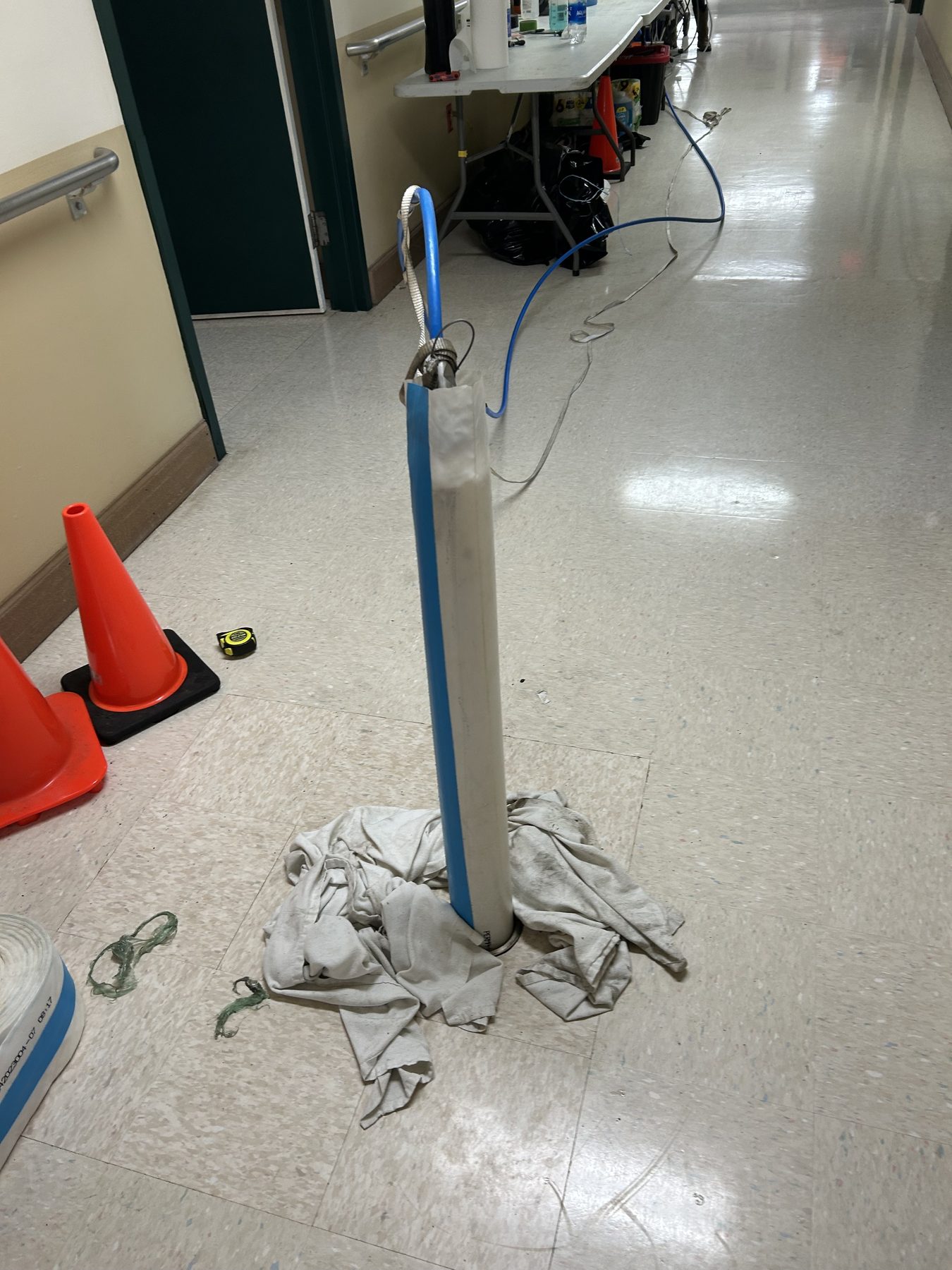
Occupied facility, corridor lining
Sanitary line rehabilitated inside a live building. Work staged behind cones and drop cloths in an active corridor, with the space handed back at the end of each shift. No excavation, no closure, no relocated occupants.
- Setting
- Occupied building
- Access
- Existing cleanout
- Excavation
- None
- Closure
- None
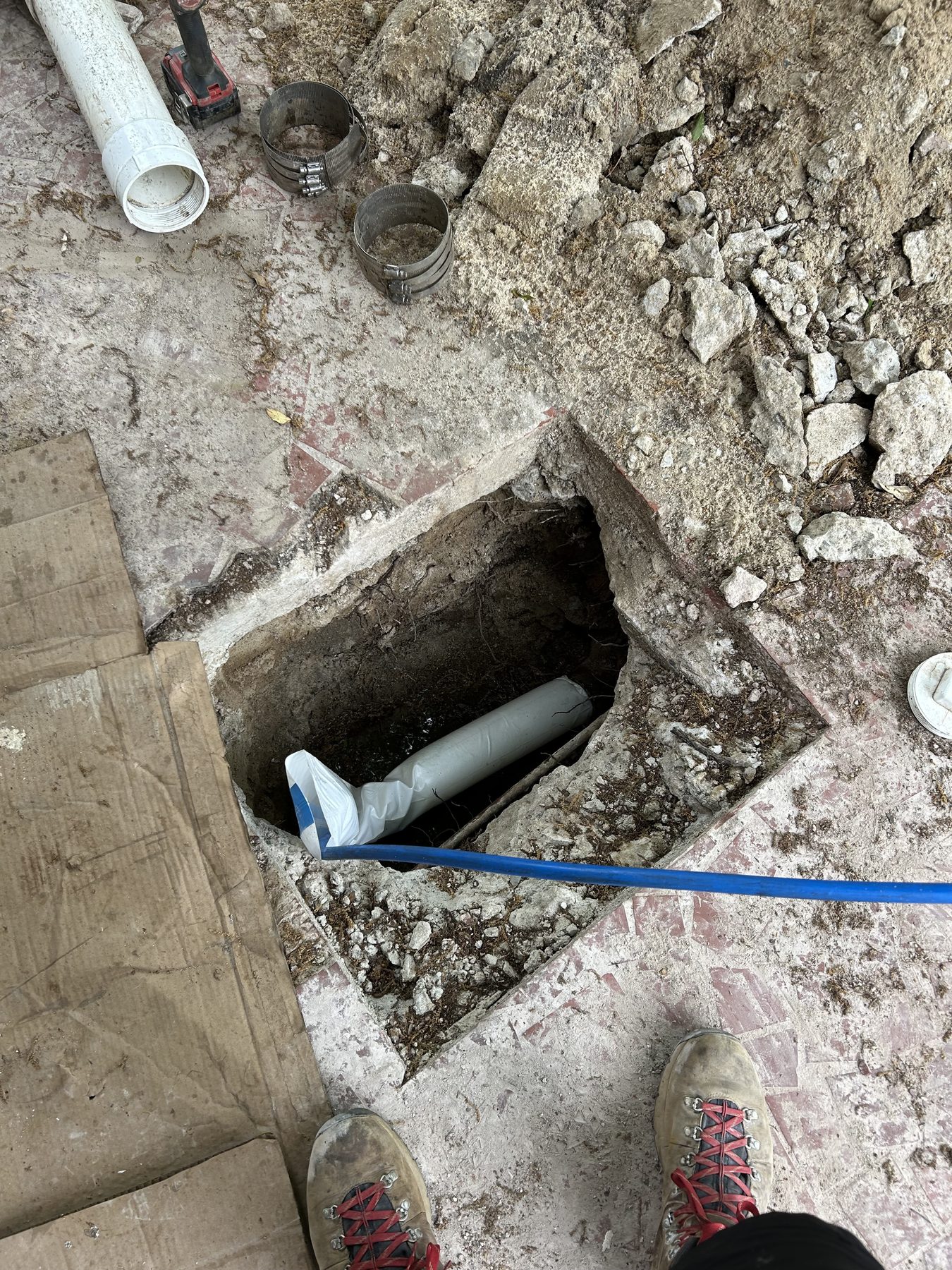
Under slab and hardscape
Where a line runs beneath concrete, a single small access point replaces a full trench. The liner is drawn through the damaged section and cured, leaving the surrounding slab, drive, and walkways intact.
- Setting
- Under concrete
- Access
- Single access point
- Excavation
- Minimal
- Slab replaced
- No
Commercial & institutional
Fix the pipe. Don't close the property.
A pipe failure at a multi-tenant or institutional property is never only a plumbing problem. It's occupant complaints, liability exposure, and unplanned capital spend. We inspect aging infrastructure before it fails and repair it without excavation, road plates, or lost parking.
- Avoid unplanned emergency repairs and occupant complaints
- Protect curb appeal, landscaping, and property value
- Reduce liability from backups, sinkholes, and property damage
- Extend the life of underground infrastructure
- Plan proactively and budget more effectively
Where we work
Service areas
Full service
Pipe lining, camera inspection, jetting, drain cleaning, and sewer replacement.
Pipe lining statewide
Trenchless CIPP lining, anywhere in South Carolina.
Frequently asked
Sewer and drain questions answered
How much does trenchless pipe lining cost in Columbia, SC?
Trenchless pipe lining typically runs $80–$250 per foot installed, depending on pipe diameter, access, and how much prep the line needs. Most residential sewer lining jobs in the Columbia area fall between $4,000 and $15,000. We always provide a written quote after a camera inspection — no guessing, no surprise fees.
How long does pipe lining last?
A properly installed cured-in-place pipe (CIPP) liner is engineered to last 50 years or more. It's seamless, root-resistant, and corrosion-resistant — usually outlasting the original pipe by decades. Most lining systems carry manufacturer warranties in addition to our workmanship warranty.
What's the difference between trenchless lining and digging up the line?
Traditional pipe replacement means excavating your yard, driveway, or interior floors to remove and replace the old pipe — restoration costs alone can run thousands. Trenchless lining inserts a resin-saturated liner inside the old pipe through existing access points, cures it in place, and creates a new seamless pipe — no digging required. Most lining jobs finish in a single day; full excavation can take a week or more.
Do you clear regular drain clogs, or only do trenchless lining?
Both. We handle everyday drain backups, mainline clearing, hydro jetting, and sewer camera inspections — the same things you'd call any plumber for. Trenchless pipe lining is what we do when a line is damaged enough that drain cleaning alone won't keep it open. Many of our lining customers start as a drain call.
When should I get a sewer camera inspection?
Before buying a home (especially anything built before 1980), after recurring drain backups, after you've had to snake the same line more than once, or if you have cast iron, clay, or Orangeburg pipe. A sewer camera inspection tells you exactly what's going on underground so you can budget for the right fix.
What areas do you serve?
We're based in Columbia, SC and serveour named Midlands service area— Columbia, Lexington, Irmo, West Columbia, Cayce, Blythewood, Chapin, Forest Acres, Camden, Newberry, Sumter, Orangeburg, and the rest of the Midlands across Richland, Lexington, Kershaw, Newberry, and Calhoun counties.
Do you offer free sewer inspections?
Yes — we offer free inspections in Columbia and Lexington. Outside that area, ask when you call and we'll let you know how inspections work for your zip code. Either way, you'll get a clear, written quote before any work begins.
What types of pipe can be relined?
Cast iron, clay, Orangeburg, PVC, ABS, and concrete pipes can typically be relined as long as the existing pipe still holds its shape and isn't fully collapsed. We confirm with a camera inspection before we quote a lining job.
Let's solve the problem — without disrupting your property.
Call or text for a camera inspection and a straight answer about whether the line needs lining, cleaning, or replacement.
Call or text 803-814-5544